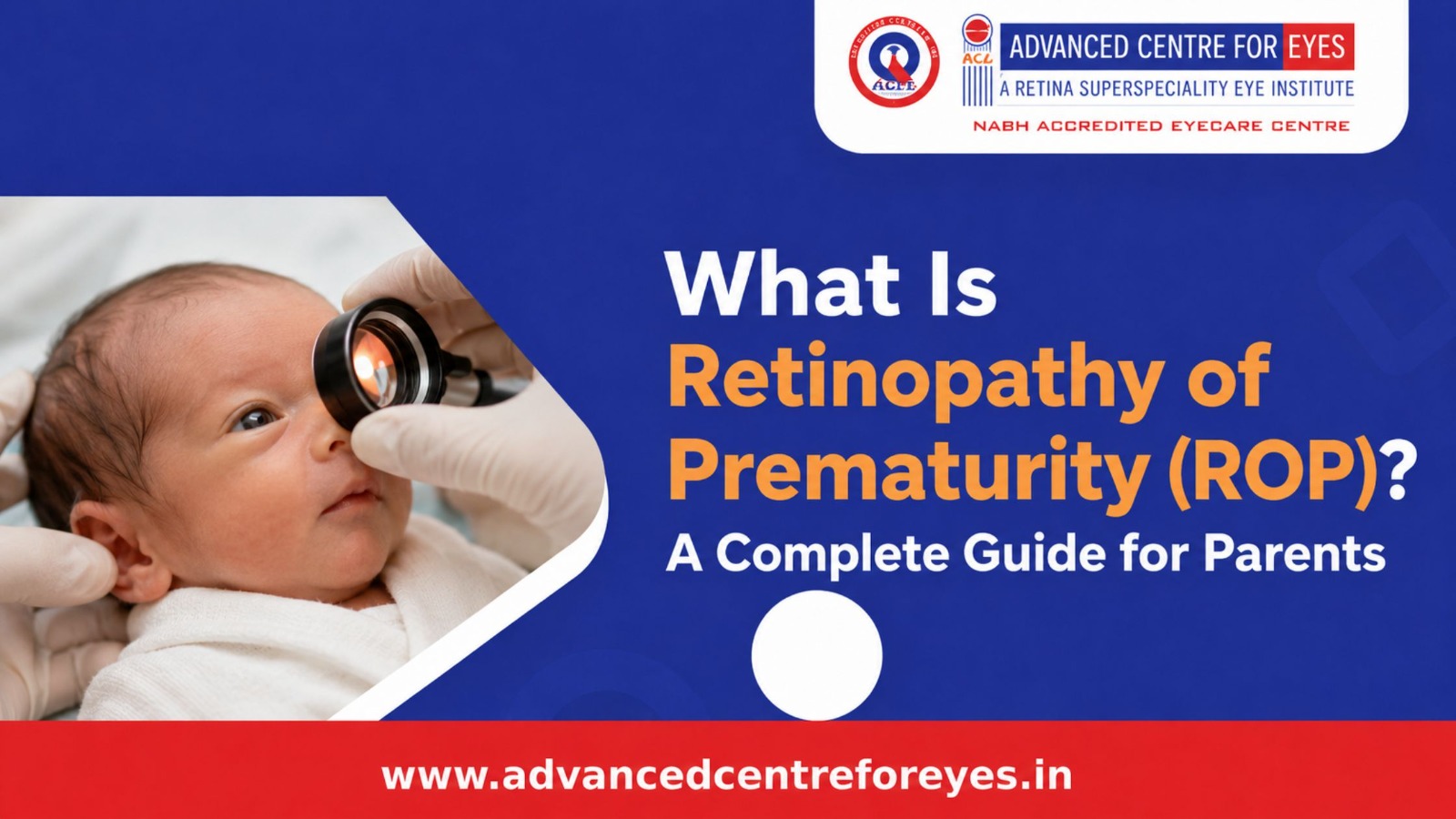
What Is Retinopathy of Prematurity (ROP)? A Complete Guide for Parents
The birth of a new baby is a grand occasion for a family. But sometimes when a baby is born prematurely, some health related issues may arise. One of these is Retinopathy of Prematurity, or ROP. It’s basically an eye disorder. It could affect premature babies and if left untreated can cause bilateral vision loss.
Understanding ROP helps you make better choices for your baby’s vision. Early detection would result in early treatment, thus prevention of serious vision threatening problems later on. Parents of affected infants should be aware of the disease ROP and its repercussions. To prevent any kind of risk, visit the best eye hospital for children in Ludhiana. As a trusted Eye Care Hospital in Ludhiana, Advanced Centre For Eyes can help safeguard your child’s vision. To enhance your knowledge, this guide will cover all aspects of this eye condition.
What is ROP?
This is a disease which is associated with the retina. The retina is the photosensitive membrane which is present at the rear end of the eye. It is responsible for capturing visual information and sending it to the brain.
Since premature babies do not reach maturity during pregnancy term, the blood vessels of their retinas donot fully develop.
After the baby is born, such abnormal development of blood vessels can result in ROP. If the condition is serious enough, then it could result in retinal bleedings, scar tissues or even retinal detachment that would cause loss of vision.
ROP mostly occurs among babies born much earlier than expected or babies born with very little body mass.
Why Does ROP Happen?
Retinal blood vessels slowly develop until the final weeks of pregnancy. But if the baby takes birth too soon, this process stops short.
As the baby grows outside the womb, there is likely to be development of abnormal blood vessels in the retina. The vessels are often fragile and tend to bleed, leading to scar tissue formation. This can result in pulling of the retina, hence retinal detachment.
Although medical science has now enhanced life expectancy in preterm infants considerably, ROP continues to be a condition requiring vigilant monitoring.
Risk Factors
The retinal vessels of premature babies could fail to develop properly in the womb. However, not every premature baby has ROP. Some factors that increase the likelihood of this condition, include:
- Born before 31 weeks
- Low birth weight
- Breathing difficulties requiring oxygen therapy
- Had respiratory distress syndrome
- Suffered infections
- Needed a blood transfusion
- Was one of twins, triplets, or more
- Medical instability after birth
Infants at risk for these conditions must receive timely eye checks for possible retinal problems at the Best Eye Hospital for Children in Ludhiana.
Prominent signs of ROP
The problem with ROP is that when it starts to develop, there are no apparent signs for the parents to see. Since the defect occurs within the eye, it doesn’t show up with obvious symptoms at first.
Sadly, these usually appear when ROP is already advanced, so regular eye screenings are recommended at the best eye hospital in Ludhiana.
Stages of ROP
ROP is a serious eye condition that affects premature babies. It happens when the normal growth of blood vessels in a baby’s retina gets disrupted. Sometimes, this leads to abnormal blood vessels forming, which can even cause retinal detachment. Eye doctors use a staging system to describe how ROP advances according to structural changes observed in the retina.
Stage 1: Demarcation Line
This is the earliest sign doctors look for. There’s a thin, flat, white line on the retina. It separates the vascularized retina from the avascular retina.
Stage 2: Ridge Formation
Here the demarcation white line turns into a raised bump, or ridge, protruding above the retinal surface. The split between the vascularized and avascular areas becomes more prominent.
Stage 3: Extraretinal Fibrovascular Proliferation
At this stage, the eye condition worsens. Abnormal blood vessels start growing away from the ridge into the vitreous, the jelly-like center of the eye. They usually have bleeding & fibrous, scar-like tissue with them. There’s now a much higher risk the retina will get pulled out of place
This stage occurs because of the hypoxic avascular retina releasing growth factors, such as VEGF, which promotes formation of abnormal blood vessels.
Stage 4: Partial Retinal Detachment
Fibrovascular traction causes the retina to detach partially from the retinal pigment epithelium. Doctors divide stage 4 into two types:
Stage 4A:
- Some part of the retina detaches
- Macula (center of vision) stays in place
- Central vision often remains okay
Stage 4B:
- The detachment now includes the macula
- This puts central vision at real risk
Stage 5: Total Retinal Detachment
This is the most extreme stage. The retina completely detaches, sometimes taking on a funnel shape. The effects are severe and permanent because serious vision loss is apparent.
Plus Disease: A Sign of Severe ROP
Plus disease isn’t its own stage, but it’s a warning sign that ROP is getting worse. Here’s what to watch for:
-Marked dilation of retinal blood vessels
- They look extra wide and twisty
- High risk of rapid disease progression
Doctors pay special attention to plus disease when deciding how quickly to treat ROP.
Why ROP Happens: A Quick Look at the Science
ROP unfolds in two phases.
Phase 1: Hyperoxic Phase
After early delivery, babies have access to oxygen concentration levels that are comparatively higher than those experienced in the womb. This limits the production of VEGF and inhibits the natural development of retinal blood vessels.
Phase 2: Hypoxic Phase
During the maturation process of the retina, there is an increase in the oxygen needs. Oxygen deprivation occurs in areas without blood vessels; this causes an excessive amount of VEGF formation.
Why Early Detection Is So Important
Not every case of ROP requires treatment because early stages can sometimes improve on their own. But from Stage 3 onward, the risk of vision loss becomes extremely high. Retinal detachment and blindness can be caused by abnormal growth of blood vessels and fibrous tissue that pulls on the retina. That’s why early detection and intervention are so important for premature babies. Timely ROP treatment can make all the difference in protecting a child’s vision for the future.
Why Early Screening Matters
Early detection is the key to prevention of vision-harming consequences of ROP.
Ophthalmologists advise for screening those babies who are:
● Prematurely born
● Have low birth weights
● Or have other neonatal conditions
The initial retinal evaluation is planned 3-4 weeks post-birth according to the gestational age and general health condition of the infant.
In this process, the doctor examines the retina with the help of sophisticated medical equipment to identify any abnormal blood vessel growth. Follow-up visits is essential in some cases because this condition tends to advance very quickly.
Diagnosing ROP
The diagnosis will involve an extensive retinal examination carried out by a pediatric ophthalmologist or a retinal specialist.
The process will normally include the following:
● Pupil dilation with use of eye drops
● Retinal examination using specialized instruments
● Determining the amount and stage of abnormal blood vessels growth
This process is completely safe, and it offers useful information regarding the state of the baby’s eyes. Based on the findings, the doctor decides whether the infant needs observation or treatment.
Treating ROP
Not every baby needs treatment; mild cases often heal up as the retina matures. If it’s more serious, doctors have options:
Laser Treatments
One of the most common ways to deal with ROP is laser therapy. The procedure involves targeting areas of the retina where vessels have not reached.
Its aim is to prevent worsening and decrease the risk of retinal detachment.
Anti-VEGF Injections
Some medications can be injected directly into the eye to stop abnormal growth of blood vessels in the retina.
Retinal Surgery
In case of retinal detachment, a surgical procedure is performed to attach the retina.
The best treatment depends on how far ROP has reached and baby’s overall health.
Long-Term Eye Care
Despite proper treatment, children with history of ROP will have higher risk of some ophthalmic diseases in their lifetime such as:
● Nearsightedness
● Lazy eye
● Crossed eyes
● Glaucoma
● Retinal problems in adulthood
Children must undergo regular eye checkups for proper visual development. Parents must also watch out for any developmental problems related to sight and contact an eye professional if anything unusual occurs.
How Parents Can Help
Role of parents in the safety of their kid’s eyes is quite crucial. Some effective ways include:
● Fulfilling all suggested screening procedures
● Promptly attending follow-ups
● Having proper consultation with the ophthalmologist
● Tracking visual development of the child
● Long-term eye care as advised by the experts
Quick action makes all the difference. Proper knowledge and timely consultation can be very helpful in this regard.
Conclusion
ROP is a severe yet treatable ophthalmic disorder that can impact certain babies born prematurely. With the help of advanced screening tests and treatment methods, children suffering from ROP can have healthy eyesight in the future. However, early detection, proper monitoring, and prompt intervention on the part of qualified doctors are vital.
Parents who need to get their baby’s eyes evaluated by specialists should be sure to find a trustworthy Best Eye Hospital in Ludhiana. As a reputed Eye Care Hospital in Ludhiana, Advanced Centre For Eyes provides all the necessary services to premature babies and children. Should you require the best Eye Hospital for Children in Ludhiana, consulting with professionals at this facility is recommended.